One Roof, Six Rosters: How Warehouse Studio Compounds Quietly Became Record Labels
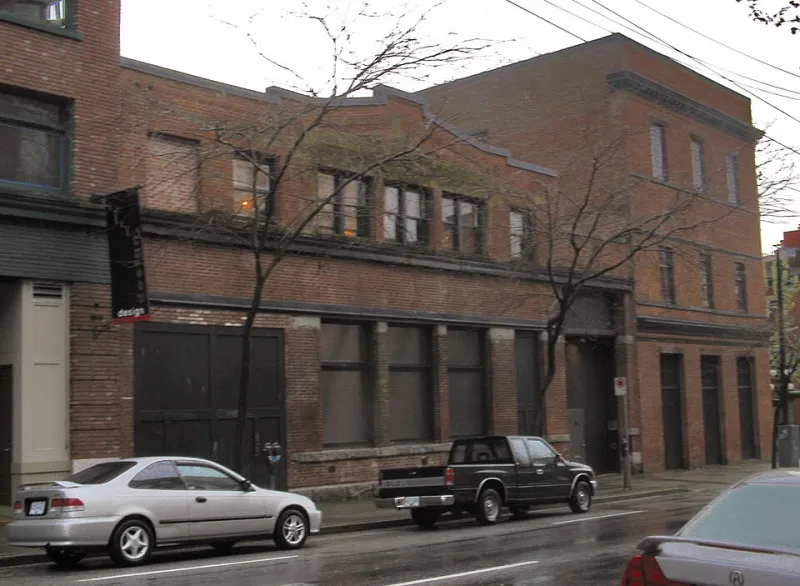
Photo: No machine-readable author provided. Bobanny assumed (based on copyright claims)., Public domain, via Wikimedia Commons
Pull up to a corrugated steel building on the industrial edge of an American city at 2 a.m. and you might hear four sessions running at once. Not in one building — in one room. Drums bleeding through drywall on the left, a singer tracking hooks down the hall, somebody's cousin pressing tour tees by the loading dock. Welcome to the warehouse compound, the most underrated business model in independent music.
What a Compound Actually Is
Strip away the mystique and the formula is simple: a group of artists leases a raw commercial space — often in a zoning gray zone where nobody asks too many questions — and divides it into tracking rooms, a shared live area, storage, and whatever else the operation needs. Rent gets split six ways instead of crushing one artist. An engineer might take a reduced rate in exchange for a point on every record cut there. A videographer who shoots all the crew's videos might trade studio time for b-roll.
What starts as a cost-saving move mutates into something bigger. When six artists share a roof, they share release calendars. They appear on each other's records. They run each other's merch tables. Without anyone filing paperwork, the compound has become a label.
The In-House A&R Nobody Applied For
Here's the part traditional A&R departments can't replicate: the compound filters talent constantly. Every collaborator, feature verse, and hanger-on who walks through the door gets evaluated by a room full of people whose ears have already been proven right — they're all still here, still making rent, still shipping records.
One Atlanta-based compound we spoke with has pulled two artists out of their extended circle in the past year, both of whom now anchor the collective's release schedule. No scouting budget. No showcase circuit. Just proximity and a group chat that votes faster than any label meeting ever could.
Merch Racks and Shipping Labels by the Loading Dock
The logistics side is where compounds start looking genuinely corporate. Because multiple artists share one address, one scale, one shipping account, and often one part-time hire who handles fulfillment, per-unit costs drop across the board. Vinyl runs get bundled. Tour merch gets stored between legs. The person who runs the label's Instagram also packs boxes on Tuesdays.
Cross-promo pacts function like label marketing spends, except they cost nothing. A hook from the compound's biggest artist on a newcomer's single is worth more than any playlist pitch. When the whole roster posts the same drop on the same night, the algorithm treats a six-person compound like a six-figure campaign.
The Math That Scares Traditional Studios
A commercial studio in Los Angeles or New York charges hourly rates that assume corporate clients and label sessions. An artist renting a compound bay might pay the equivalent of ten studio hours per month — for unlimited access. The engineer inside is cheaper because there's no booking overhead, and the sessions go longer because nobody's watching a clock.
That math is brutal for legacy studio business models built on billable hours. The compounds aren't competing on sound quality alone; they're competing on total cost of making a record, and they're winning by a mile.
The Growing Pains
It's not all clean. Compounds run on handshake deals, which means splits, master ownership, and exit terms live in text threads. We've covered before what happens when those conversations go wrong — and warehouses have all the same fault lines, compressed into one building. Zoning violations, noise complaints, and landlord surprises are constant background threats. One code enforcement visit can shut down an operation that took two years to build.
But here's the thing: the mixtape era had the same fragility, and it still changed everything. The compound model is already producing artists with real catalogs, real fanbases, and real revenue — no co-sign required.
Watch This Space
If you're an artist paying hourly for studio time and wondering why your math never works, look at the industrial district twenty minutes outside your city. Somebody's already split the rent. The next wave of rosters might not be signed to labels at all — they might just share a lease.
The streets figured this out first. They always do.