The $40,000 Sneaker Ad: Why Sync Money Is the Underground's Best-Kept Secret
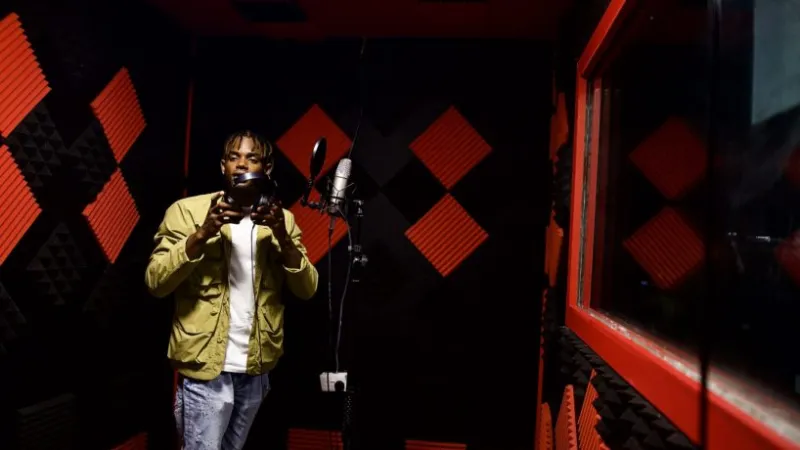
Photo: Smoovethegreat, CC BY-SA 4.0, via Wikimedia Commons
There's a rapper in Atlanta who had a rough 2023. His album underperformed, the tour lost money, and his monthly Spotify statement read like a phone number — a small one. Then a music supervisor looking for something "gritty but hopeful" found his catalog on a licensing platform, dropped one of his tracks under a car commercial, and wired him a check bigger than anything his catalog had generated in two years of streaming.
He's not alone. And almost nobody in hip-hop is talking about it.
The Math Nobody Shows You
Let's start with receipts. A stream on Spotify pays out somewhere in the neighborhood of $0.003 to $0.004. To clear $5,000 from streaming alone, you need well over a million plays. Every month. Forever.
Now look at sync — the industry term for music placed in TV shows, ads, films, trailers, and games. An independent artist landing a track in a mid-tier cable drama might see $2,000 to $15,000 for a single use. A national commercial? Those deals routinely run $25,000 to $100,000 or more, depending on the term and territory. Video game placements, which live forever and get played by millions of people, often sit somewhere in between.
One placement can outearn a full year of streaming. It's not even close.
And here's the kicker: sync doesn't cannibalize your catalog. That car commercial runs for three months, the check clears, and the song keeps streaming like nothing happened. It's found money on top of found money.
How Supervisors Actually Find You
The myth is that you need a publisher and a lawyer and a cousin at NBC. The reality is messier and way more accessible.
Music supervisors — the people who pick songs for shows and ads — work brutal deadlines. They're often pulling tracks at 11 p.m. the night before a spotting session. When they need a moody trap instrumental or a boom-bap track that sounds authentic without costing clearance hell, they go where the music is easy to find and easy to clear.
That means:
-
Licensing platforms. Sites like Musicbed, Artlist, Songtradr, and Epidemic Sound are the new demo tapes. Supervisors search by mood, BPM, and genre. If your metadata says "dark, 140 BPM, cinematic drums," you're in the pile. If your file is named "final_mix_v7_REAL.mp3," you're not.
-
Instrumental versions. Shows need background music that doesn't fight dialogue. Every beat you own should have a clean instrumental and a stems-ready alternate. Artists who skip this lose half their placements before the search even starts.
-
Owning your masters. This is the whole game. A supervisor can't touch a track tangled up in an unclear sample or a dead-label deal. Independent artists who kept their rights — or negotiated them back — are the ones getting the calls. The major labels charge supervisors massive fees and move slow. You can say yes in 48 hours. That speed wins jobs.
-
The credit roll economy. Indie films and streaming dramas with modest budgets can't afford big clearance fees, so they hunt for artists who own 100% of their publishing. Your "small" indie placement becomes a calling card for the next, bigger one.
Why Hip-Hop Is Winning This Game Right Now
For years, sync was a rock and indie-pop world — the land of sad acoustic covers and synth swells. That's flipped. Advertisers want culture, and hip-hop is the culture. Sneaker brands, beer companies, streaming platforms, sports promos — they all want beats that sound like the street without the clearance nightmare of a superstar feature.
That's exactly what underground rappers have in bulk: original production, owned outright, at every tempo and mood imaginable. The producer who's been selling leases on BeatStars for $50 a pop has a catalog of hundreds of instrumentals. Tag them properly, clear the samples, and that same catalog becomes a licensing inventory that works while he sleeps.
One producer we spoke with — who asked not to be named while deals were pending — put it plainly: "I made more off two video game placements last year than off 40 million streams across my whole discography. I still make beats for artists. But the TV money pays my mortgage."
The Fine Print Still Applies
Before you sprint to upload your catalog, a few realities:
Sample clearance is non-negotiable. That soul flip you did over a YouTube loop? A supervisor's clearance team will find the original. Uncleared samples are the number one reason placements die. If you can't trace the rights, rewrite the beat.
Watch the exclusivity traps. Some licensing platforms want broad rights to your catalog. That's fine for a slice of it — just don't hand over exclusivity on your best work for a flat-fee deal that pays $80 when the song lands.
Register everything. Your PRO (ASCAP or BMI for most US artists) won't pay performance royalties on a broadcast placement if your song titles and writer splits aren't registered correctly. The handshake splits problem we've covered before? It kills sync money too.
The Play
Sync isn't sexy. There's no cosign, no chart, no clout in your group chat. But it's the rare revenue stream where being independent is an advantage instead of a handicap — where owning your masters, moving fast, and having a deep catalog of cleared beats makes you more attractive than the label acts.
The artists winning at this aren't the loudest ones online. They're the ones with organized files, clean splits, registered publishing, and a patience for a game that pays in quarters instead of clout.
One placement won't make you famous. But it might pay for the album that does. And in this economy, that's a better deal than a million streams and a pat on the back.