Last On, First Remembered: The Midnight Math Behind Who Actually Blows Up Next
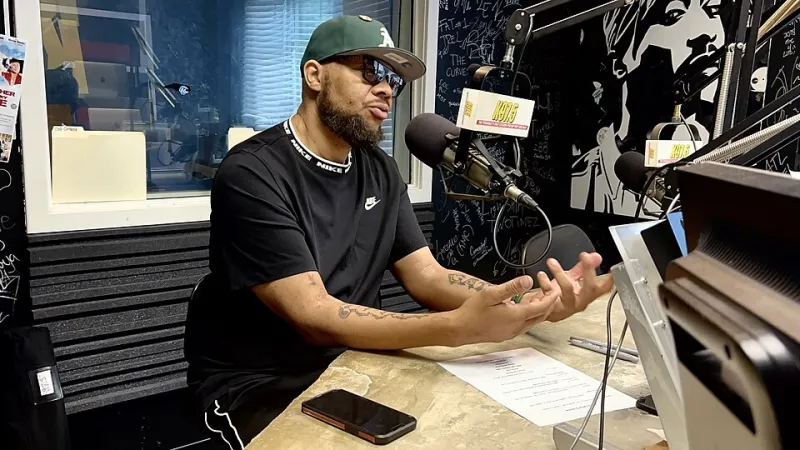
Photo: Derty Den (American HipHop Artist), CC BY-SA 4.0, via Wikimedia Commons
There's a hierarchy at every independent hip-hop show, and everybody on the bill knows it. The flyer might list six names in alphabetical order to keep the peace, but nobody's confused. The opener plays to the bartenders and the first wave of friends. The middle slots trade the crowd back and forth. And then there's the last act — the one that goes on when the night is already old, the bar tab is closing, and half the room has one foot out the door.
That's the 2 A.M. slot. And in the independent scene, it's the closest thing to a co-sign that money can't buy.
The Slot Nobody Wants — Until They Understand It
Ask a young artist what slot they want and most will say early. Get it over with, play to a fresh crowd, get home at a reasonable hour. Ask a promoter who actually has a future and they'll tell you the opposite. The closing slot is a test, and everybody in the building is watching you take it.
"Anybody can hold a room at 9 P.M.," one longtime NYC booker told us, speaking on background because he still has to work with all of these artists. "The room is sober, the friends are there, the energy is handed to you. You want to know who can really rap? Watch who goes on at 1:45 to a crowd that didn't come to see them."
That's the dirty secret of show billing: the late slot is less a reward than an audition. Promoters use it to find out which artists can convert a cold room. Bookers use it to build relationships with the acts they want on festival undercards next summer. And the artists who survive it tend to carry that story with them forever — ask anyone who's seen a then-unknown rapper win over a half-empty venue at last call, and they'll tell you they knew before the industry did.
Why Midnight Crowds Don't Lie
Streaming numbers can be gamed. Playlists can be pitched. But a crowd at midnight has been standing for three hours, the opening acts have already spent their best material, and the only reason anyone stays is because you're giving them a reason to.
Bookers call this the honesty hour. The casual listeners have left. The friends who showed up early for their own slot have checked out. What's left is a room of strangers, and either you win them or you don't. There's no production trick, no hype crew, no guest verse that papers over a weak fifteen minutes. It's just you, the PA, and whatever you've actually got.
That's why crowd behavior at midnight carries more weight in scene circles than any analytics dashboard. A promoter who watches a closer hold two hundred tired people through a 2 A.M. set has learned something no DSP report can tell them: this artist can work. And work is the whole business. Festivals need acts who can play a 12:30 P.M. field stage to people who wandered over from the food trucks. Tours need openers who can warm a room that came for somebody else. The 2 A.M. set is a rehearsal for all of it.
How Late Slots Actually Get Negotiated
The mechanics are less glamorous than the mythology. On the independent circuit, billing is a currency, and it gets traded constantly. Headliners who bring guaranteed door numbers get the late slot by default. But when the bill is stacked with rising acts, promoters make judgment calls — and those judgment calls get remembered.
Some artists negotiate hard for the closer, arguing their draw justifies it. Smart ones sometimes push the other way, asking to slot second-to-last so they can play to the headliner's crowd as it builds. Others quietly accept whatever they're given and let the set do the talking. The one move that never works, per every promoter we spoke to: complaining about your slot publicly. The scene is small, group chats are smaller, and a reputation for billing drama travels faster than any song.
There's also a regional flavor to it. In Atlanta and Houston, where late-night venue culture runs deep, closing sets are a rite of passage with their own legends. In smaller markets — a basement in Columbus, a loft in Portland — the 2 A.M. slot is often where the promoter's personal favorite hides in plain sight. If you want to know who a local booker is betting on, don't read the flyer order. Watch who gets the room last.
The Set That Travels
Here's the part the playlist era forgot: a great closing set moves person to person. Somebody films forty seconds on their phone. A booking agent in the crowd flags the name. Another promoter at the show mentions it to a colleague the next day. Within a month, that artist has three offers in their inbox from cities they've never played — not because an algorithm noticed, but because a hundred people in a room at midnight couldn't stop talking about it.
That word-of-mouth chain is the original viral loop of hip-hop, and it still outperforms most digital strategies. A playlist placement gets you a stream count. A legendary late set gets you a reputation, and reputations compound.
So if you're an artist staring at a flyer with your name in the bottom slot — the one that goes on when everyone's tired and the night has already peaked — understand what you're actually holding. That's not the throwaway slot. That's the scene's real A&R department, running its most reliable test, in front of the exact people who decide who gets booked next.
Win the room at 2 A.M., and the industry finds out by breakfast.