The Pop-Up Economy: How Corner Tables and IG Drops Are Bankrolling Albums
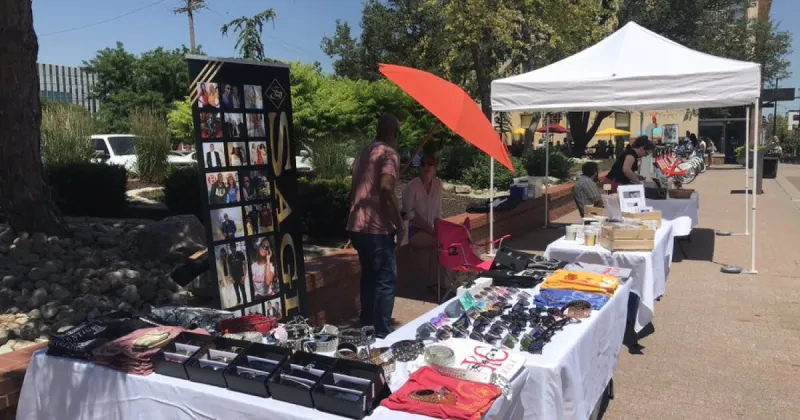
Photo: independent rapper selling merchandise at pop-up table street vendor, via ewscripps.brightspotcdn.com
There's a folding table outside a sneaker shop on the South Side of Chicago, and it's doing what a label advance used to do.
On it: heavyweight tees with a hand-drawn logo, hoodies in two colorways, and a QR code that leads straight to the artist's latest single. By the end of the afternoon, the guy behind the table has cleared enough to book two more studio sessions and pay his engineer half of what he owes. No A&R. No recoupment. No strings.
This is the merch economy, and it's quietly become the most reliable funding source in independent hip-hop.
The Math That Makes It Work
Here's why the hustle adds up. A blank quality blank costs $8-12 in bulk. Screenprint it, sell it for $40 outside a show or a block party, and you're looking at $25+ profit per unit. Move 100 pieces at a pop-up weekend and you've got $2,500 — roughly the cost of recording and mixing an EP at reasonable indie rates.
Compare that to chasing a label deal, where an advance gets recouped before you see a dime of streaming money, or crowdfunding, where you're begging your following instead of selling to it. Merch flips the dynamic: the fan walks away with something physical, the artist walks away with the budget, and nobody owns a piece of anybody.
Instagram and TikTok turned the model into a machine. Limited drops announced on stories, countdown timers, "48 hours only" colorways — it's streetwear marketing logic applied to rap merch, and it prints. Artists coordinate drop dates with single releases so the song and the tee feed each other.
Five Acts Running the Play
The blueprint is spreading fast, and these are the kinds of artists showing how it's done at the neighborhood level:
The block-party regular. Every summer weekend, this artist sets up at existing events — car shows, cookouts, flea markets — no permit drama, no venue fees. The table isn't the side hustle; the music is. Album funds accumulate $300 at a time.
The tour-table specialist. This act books small venues and house shows across three states and treats merch as the actual tour revenue. Door splits barely cover gas; the hoodie run pays the rent. One artist we spoke to grossed more from a two-night merch stand in Texas than from six months of streaming.
The capsule creator. Think beyond the logo tee. This artist designs full seasonal collections — hats, totes, work jackets — and releases them like albums, with cover art and tracklists of their own. The clothing brand and the rap career have merged into one product.
The pre-order strategist. This one funds production before it happens, selling a limited run tied to the upcoming album. Fans pre-pay for vinyl-and-tee bundles, and the artist books studio time with money that's already in hand. Zero debt, zero recoupment.
The collab merchant. Instead of printing alone, this artist partners with a local boutique or barbershop that stocks the merch on consignment. The shop gets a cut, the artist gets a permanent storefront, and the neighborhood gets a reason to come through.
Why This Hits Different Right Now
The timing isn't accidental. Streaming pays fractions of a cent, sync placements are lotto tickets, and major label deals have gotten stingier for artists without proven momentum. Meanwhile, production costs — studio time, mixing, videos — haven't gotten cheaper.
Physical product is the one revenue stream where an independent artist controls the margin completely. And in hip-hop culture specifically, merch was never just merch. It's proof of presence. Wearing a local artist's hoodie in a city where everybody knows everybody is marketing no billboard can buy.
There's also a deeper shift happening: the artists funding albums this way own 100% of everything. Masters, publishing, the brand, the customer list. When a bigger opportunity eventually calls — and for the ones grinding, it does — they negotiate from a table of their own, not from across one.
The Table Is the New A&R
The old gatekeepers watched SoundCloud numbers. The new reality is that the folding table outside the barbershop might be the most honest A&R department in the industry. If you can move product to real people, face to face, at neighborhood prices — you've got something no playlist can fake.
The album gets made either way. The question is just whose name is on the check. More and more, the answer is the artist's — one tee at a time.